
www.teitimes.com
May 2026 • Volume 19 • No 3 • Published monthly • ISSN 1757-7365
THE ENERGY INDUSTRY TIMES is published by Man in Black Media • www.mibmedia.com • Editor-in-Chief: Junior Isles • For all enquiries email: enquiries@teitimes.com
Integrating electricity markets Markets, not ministers
Achieving a truly integrated European energy
market will require more than just building
new cables and grid interconnections.
Page 13
A new book has added a voice to a growing
consensus: the energy transition is today
driven by economics, not ideology.
Page 14
News In Brief
Shift towards energy
independence comes at a
price
As countries prioritise energy secu-
rity, energy demand will be increas-
ingly met through electrication,
renewables, coal and nuclear, while
reliance on globally traded fuels
declines, according to Wood Mack-
enzie. However, this shift comes
with trade-offs.
Page 3
US lawmakers challenge
Trump wind leases buyback
US lawmakers have written to the
Secretary of the Interior calling for
him to halt a Trump administration
plan to pay $928 million to TotalEn-
ergies to relinquish leases for off-
shore wind projects off the US East
Coast.
Page 4
Asia turns to coal, as energy
crisis splits global markets
Several Asian countries are turning
to coal red power generation to
help offset rising gas prices and sup-
ply risk caused by the closure of the
Strait of Hormuz.
Page 5
Germany considers nuclear
instead of gas
Germany’s Economy Minister
Katherina Reiche has called for a
rethink of her country’s opposition
to nuclear power, a change that
would reverse a phase-out decided
in 2011.
Page 7
Near-700 GW surge boosts
renewable energy prole
Renewable power capacity reached
5149 GW in 2025, after a re-
cord-breaking 692 GW was added,
representing a 15.5 per cent increase
on the previous year.
Page 8
TotalEnergies and Masdar to
form $2.2 billion JV
TotalEnergies and Abu Dhabi Fu-
ture Energy Company PJSC (Mas-
dar) have signed a binding agree-
ment to establish a $2.2 billion 50/50
joint venture that will merge their
onshore renewable activities across
nine countries.
Page 9
Technology Focus
Scaling the number of protection
relays needed to cover more feeders
can be a challenge. A concept that
uses virtualisation could be the solu-
tion, bringing cost, space and envi-
ronmental benets. Page 15
Advertise
advertising@teitimes.com
Subscribe
subscriptions@teitimes.com
or call +44 (0)1933 392987
The European Commission has issued a number of proposals aimed at protecting businesses
and households from energy prices that have once again skyrocketed as a result of
geopolitical upheavals. Junior Isles
Europe’s clean energy transition at risk of slowing down
THE ENERGY INDUSTRY
TIMES
Final Word
Europe must be careful in
balancing short-term relief for
consumers against long-term
goals, says Junior Isles.
Page 16
The European Commission has pro-
posed actions to protect Europeans
from the fossil energy crisis, stressing
that the current geopolitical situation
is a stark reminder that accelerating the
transition to clean, secure and afford-
able energy is an economic and secu-
rity imperative.
Last month, the Commission issued
its ‘AccelerateEU’ Communication in
a move to address the impact of recent
spikes in the price of imported fossil
fuels arising from the war on Iran.
AccelerateEU presents both short-
term and structural measures with
longer-term effect to further reduce
dependency on volatile fossil fuel
markets and build Europe’s resil-
ience against future shocks based
on homegrown clean energy and
electrication.
Ursula von der Leyen, President of
the European Commission, said: “The
choices we make today will shape our
ability to face the challenges of today
and the crises of tomorrow. Our Ac-
celerateEU strategy will bring both
immediate and more structural relief
measures to European citizens and
businesses. We must accelerate the
shift to homegrown, clean energies.
This will give us energy independence
and security, and mean we are better
able to weather geopolitical storms.”
A number of actions have been pro-
posed under the strategy.
Importantly for the electricity sec-
tor, the measures will accelerate the
shift to homegrown clean energy to
replace oil, gas and fossil transport
fuels. By the summer, the Commis-
sion will present an Electrication
Action Plan. It will include an ambi-
tious electrication target and mea-
sures to remove barriers to the elec-
trication of the industrial, transport
and building sectors.
Electrication must be accompanied
by a grid network which is t for pur-
pose, said the Commission. First
steps are ensuring that current legisla-
tion is fully implemented and the ne-
gotiations on the European Grids
Package are concluded swiftly. Max-
imising existing renewable energy
infrastructure is another action, where
rapid repowering of big wind farms
and renewable plants, including off-
shore wind parks and hydropower
plants can quickly deliver much need-
ed additional relief. The Commission
will also present a legislative propos-
al on network charges and taxation,
Continued on Page 2
Europe’s clean energy transition is at
risk of slowing down as investment
gaps widen, according to Eurelectric.
In a new position paper, the organ-
isation representing Europe’s elec-
tricity sector warns that up to €500
billion in annual investment is miss-
ing and calls for urgent action to re-
store investor condence and unlock
private capital.
Europe’s pathway to climate neu-
trality depends on unprecedented
levels of clean energy investment.
Estimates suggest that between €800
billion and €1200 billion per year
will be required, depending on the
scope and timeline of EU targets,
said Eurelectric. Yet current invest-
ment levels fall signicantly short of
this: as much as €500 billion annual-
ly is missing, putting at risk both
electrication and decarbonisation
objectives.
According to Eurelectric, this
shortfall is not due to a lack of tech-
nologies or willingness from indus-
try. Instead, it reects a deteriorating
investment environment that is
weakening the business case for
clean energy projects.
Eurelectric highlights that compa-
nies base their decisions on what can
be described as “strain-to-gain lever-
age”: weighing nancial risks, costs
and debt exposure against expected
returns.
Today, this balance is increasingly
unfavourable. The position paper
notes that several factors are contrib-
uting to this trend: policy uncertain-
ty, which reduces long-term visibili-
ty; volatile power prices, affecting
revenue predictability; grid bottle-
necks, delaying project connections;
counterparty risks, particularly in
long-term contracts.
The result, says Eurelectric, is a
growing paradox: companies are
ready to electrify, the technologies
are available, but key enablers such
as Power Purchase Agreements
(PPAs) are stalling due to credit risk
concerns and an unstable investment
environment.
While the next EU budget (2028–
2034) will play an important role,
Eurelectric stresses that action must
start immediately to restore investor
condence.
The position paper sets out a
10-point derisking agenda aimed at
addressing both regulatory instabili-
ty and nancing barriers. At its core
is the need to create a stable, predict-
able investment framework. Key pri-
orities include:
n Strengthening public nancial
support
n Fully leveraging the European In-
vestment Bank (EIB) toolbox to sup-
port companies investing in clean
energy
n Expanding the EIB guarantee pro-
gramme, building on the existing
€500 million pilot
n Reducing nancial and counterpar-
ty risks
n Improving access to guarantees and
risk-sharing instruments
n Addressing credit risks that limit
long-term contracting
n Scaling up power purchase
agreements
n Removing regulatory and account-
ing barriers
n Improving market frameworks to
support long-term contracts
n Enabling PPAs to function at scale
across Europe
n Restoring condence to accelerate
the transition.
Eurelectric emphasises that a stable
regulatory and policy environment is
a precondition for investment.
“Without clear, predictable rules,
even well-designed nancial instru-
ments will struggle to attract suf-
cient private capital,” it stated.
By combining regulatory stability
with targeted derisking measures,
Eurelectric says Europe can unlock
the investment needed to accelerate
electrication, strengthen competi-
tiveness and deliver on its climate
goals.
“Europe has the technologies and
the ambition to lead the clean energy
transition. What is missing is a suf-
ciently stable and attractive invest-
ment environment.
“Closing the investment gap will
require coordinated action to reduce
risks, strengthen nancial tools and
build investor condence. Without
this, Europe risks falling behind on
its energy and climate objectives.”
Commission moves
Commission moves
to protect Europe
to protect Europe
from energy crisis
from energy crisis
Ursula von der Leyen: AccelerateEU will bring both
immediate and more structural relief measures
Picture courtesy of www.left.eu

THE ENERGY INDUSTRY TIMES - MAY 2026
2
The latest edition of the International
Energy Agency’s (IEA) ‘Global En-
ergy Review’ revealed energy de-
mand grew at a slower pace in 2025
than the year before, but electricity
consumption continued to rise much
faster than overall demand – with so-
lar PV becoming the largest contrib-
utor to growth in global energy supply
for the rst time.
The report shows that overall global
energy demand growth slowed to 1.3
per cent in 2025, slightly below the
previous decade’s average of 1.4 per
cent and signicantly lower than in
2024. The main reasons for this slow-
down were lower global economic
growth, less extreme temperatures in
some regions, and rapid uptake of
more efcient technologies.
At the same time, global electricity
demand increased by around 3 per
cent – well over twice the rate of over-
all energy demand growth. Although
electricity demand growth was slow-
er than in 2024, reecting factors such
as lower cooling demand in India and
Southeast Asia amid less severe heat-
waves, it remained above the average
of the past decade. Electricity demand
growth was driven by multiple sectors
across buildings and industry – and
boosted by fast-growing demand
coming from electric vehicles and
data centres.
All major fuels and technologies
expanded to meet rising demand, but
at very different rates. Solar PV was
the single largest contributor to
growth in global energy supply in
2025, accounting for more than 25 per
cent of the increase – the rst time on
record that a modern renewable
source has led global primary energy
supply growth. Natural gas took the
next largest share, at 17 per cent, re-
ecting its role in power generation
in many countries. Overall, renewable
sources and nuclear met nearly 60 per
cent of all growth in energy demand
– and power generation from these
sources exceeded total growth in elec-
tricity demand.
“Global energy demand continued
to increase in 2025 against a complex
economic and geopolitical backdrop,
with one trend unmistakeable: the
expanding electrication of econo-
mies,” said IEA Executive Director
Fatih Birol. “Electricity consumption
is growing much faster than overall
energy demand – and one energy
source is growing much faster than
any other. Solar PV accounted for over
a quarter of all of the world’s energy
demand growth – more than any oth-
er source, for the rst time – followed
right after by natural gas. In today’s
rapidly shifting landscape, countries
that prioritise resilience and diversi-
cation will be best placed to manage
volatility and deliver secure and af-
fordable energy in the years ahead.”
In the electricity sector, the addition-
al 600 TWh of solar PV generation
worldwide in 2025 marked the largest
structural increase ever recorded in a
single year for any electricity gener-
ation technology, contributing to a
decline in coal red electricity gener-
ation globally. Battery storage was the
fastest growing power sector technol-
ogy in 2025. The roughly 110 GW of
new battery storage capacity added
during the year exceeded the largest
ever annual capacity additions for
natural gas. Meanwhile over 12 GW
of nuclear power reactors began con-
struction in 2025, amid renewed mo-
mentum for nuclear projects in sever-
al regions.
New gures by independent think-
tank Ember revealed global clean
power output grew faster than elec-
tricity demand last year. Ember also
noted that the rapid growth of solar
power in particular contributed to a
small annual decrease in output from
fossil fuel power stations.
It marked the rst time fossil fuel
output had fallen since the 2020 pan-
demic year, Ember said. Renewable
energy sources also generated more
electricity than coal red power sta-
tions in 2025, Ember said, “for the
rst time in the modern power sys-
tem”, extending a trend rst seen in
the rst half of last year.
ensuring among others, electricity
is taxed less than fossil fuels.
It said temporary measures would
be timely and targeted. Protecting
consumers, including industry,
from price peaks can include target-
ed income support schemes, energy
vouchers and social leasing
schemes, lowering excise duties on
electricity for vulnerable house-
holds. The Commission will also
adopt a State Aid Temporary Frame-
work, which will provide addition-
al exibility for national govern-
ments, including emergency
measures to support the most ex-
posed economic sectors.
Boosting investments will also be
a priority. Signicant resources are
available at EU level, such as those
under the Recovery and Resilience
Facility (‘RRF’: €219 billion) and
cohesion policy funds. In the current
crisis, “speed and impact are para-
mount”, said the Commission,
which will assist member states to
make maximum use of available EU
funding. However, public money
alone will not cover the signicant
investment needs (€660 billion a
year until 2030) for the energy tran-
sition. To mobilise private invest-
ments, the Commission therefore
adopted a Clean Energy Investment
Strategy in March 2026. The Com-
mission will organise a Clean Ener-
gy Investment Summit bringing
together the nancial services in-
dustry, including major institution-
al investors, industrial leaders, proj-
ect developers and public nanciers
to accelerate private nancing.
The EU’s climate commissioner
Wopke Hoekstra warned, however,
that there is no nancial “work-
around” for “mind-boggling” ener-
gy price rises in Europe. Hoekstra
said: “The only way forward is more
electrication, more nuclear, more
solar, more wind, more battery ca-
pacity, more interconnectors in the
European Union, and all of it with
much more speed.”
Following the publication of the
AccelerateEU strategy, the Boards
of Directors of the European Invest-
ment Bank (EIB) Group approved
a total of €10 billion in nancing,
including almost €2 billion for ini-
tiatives to expand Europe’s clean
energy investments, ensure afford-
ability and bolster competitiveness.
The new nancing supports EU
policy priorities and the European
Commission’s “Clean Energy In-
vestment Strategy” from March
2026 as well as the AccelerateEU
plan. Under both initiatives, the EIB
Group will work with the Commis-
sion to fast-track Europe’s switch
from fossil fuels to clean energy.
The Board of the EIB endorsed
loans to support the production of
offshore wind power in Germany
and solar energy in Italy as well as
the accelerated use of renewables
by businesses in Austria. The -
nancing also backs improvements
in energy savings in heating systems
in Latvia and Dutch grid upgrades
that increase capacity for renew-
ables and expand charging possibil-
ities for electric vehicles.
Commenting on Europe’s depen-
dency on imported fossil fuels,
which has now been highlighted for
the second time in less than ve
years, EIB Group President Nadia
Calviño, said: “There is one clear
lesson from Russia’s invasion of
Ukraine and the conict in the Mid-
dle East: Europe needs to break free
from its fossil fuel dependence.”
“The investments approved today
conrm the commitment of the EIB
Group to deliver on the energy tran-
sition and strengthen Europe’s stra-
tegic autonomy.”
Continued from Page 1
Wind and solar power have grown
faster than almost anyone predicted
but projecting their future expansion
remains surprisingly difcult, nd
researchers at Chalmers University of
Technology, Sweden.
Researchers at the University have
developed what they call a computa-
tional “time machine” – a model that
outperforms existing projection
methods by using AI techniques to
analyse historical growth patterns
across countries.
Their central projection shows that
onshore wind is likely to supply
around 25 per cent of global electric-
ity by 2050, with solar reaching about
20 per cent. This is consistent with the
2°C target, but falls short of what is
required for 1.5°C.
Predicting the future is particularly
challenging for technologies like
wind and solar, where rapid cost de-
clines are offset by growing barriers
such as public opposition, infrastruc-
ture constraints and policy shifts.
“Existing models are very good at
identifying what needs to happen to
reach climate targets, but they can’t
tell us which developments are most
likely. That’s the gap we wanted to
ll,” said Jessica Jewell, Professor at
Chalmers University of Technology.
Across more than 200 countries, the
researchers identied a recurring pat-
tern in how wind and solar power
grow: long periods of relatively
steady expansion punctuated by sud-
den growth spurts often triggered by
policy shifts.
“Most models assume a smooth
S-shaped growth curve, but that’s not
how it actually looks in the real world.
Growth often comes in bursts, and if
you ignore that, you can misjudge how
fast technologies will expand,” said
Avi Jakhmola, a PhD Student at
Chalmers University of Technology
and rst author of the paper published
in Nature Energy.
With the goal of improving on cur-
rent predictions, Jakhmola created a
model built on 13 000 virtual worlds.
In each of these worlds, solar and
wind power develop in different ways
– from the fastest possible expansion
to the slowest – and everything in
between.
A machine learning algorithm was
then trained on all these worlds to
learn to predict global outcomes from
early national trends.
“When we apply the model to real-
world data, it can tell us what is the
most probable outcome for the future
– given what we have seen so far and
given all the virtual worlds it has
seen”, said Jakhmola.
By 2050, the model projects onshore
wind reaching around 26 per cent of
global electricity (central range: 20-
34 per cent), and solar around 21 per
cent (15-29 per cent). This broadly
aligns with 2°C-compatible pathways
but falls short of what’s needed for
1.5°C.
Professor Jewell said: “It’s long
been a joke how bad technology fore-
casts are. But if you’re a decision
maker, trying to gure out how hard
to push for change, you need a realis-
tic baseline. Our study is the rst step
towards developing such a realistic
view of the future.”
As countries prioritise energy security,
energy demand will be increasingly
met through electrication, renew-
ables, coal and nuclear, while reliance
on globally traded fuels declines, ac-
cording to Wood Mackenzie. Howev-
er, this shift comes with trade-offs.
Under its new conict scenario –
part of its ‘Lens Energy Transition
Scenarios’, which explores how sus-
tained geopolitical instability could
reshape global energy demand, sup-
ply and investment through 2050 –
Wood Mackenzie predicts energy
systems will become more domestic
and diversied, but also more costly,
while near-term emissions rise due to
increased coal use before converging
with the base case over the longer
term.
The scenario assumes a major geo-
political escalation beginning in early
2026, disrupting 15-20 per cent of
global oil and LNG supply. In the near
term, oil demand falls by around 9 per
cent due to supply outages before re-
covering to pre-crisis levels by 2030,
Wood Mackenzie noted.
Beyond 2030, structural shifts take
hold as countries accelerate efforts to
reduce reliance on imported fuels. Oil
and gas demand declines more rapid-
ly than in the base case, as govern-
ments prioritise domestic and diver
-
sied energy systems.
The shift towards energy indepen-
dence comes with higher system costs,
as countries move away from globally
optimised supply chains towards do-
mestic production and diversied
sourcing, says Wood Mackenzie.
“Energy independence reduces ex-
posure to external shocks, but it comes
at a structural cost premium,” said
Lindsey Entwistle, Principal Analyst,
Scenarios & Technologies. “This cre-
ates new competitiveness challenges
for energy-intensive industries, while
advantaging more self-sufcient
regions.”
Jom Madan, Principal Analyst, Sce-
narios & Technologies, noted: “Ener-
gy systems become more local, more
diversied and less reliant on complex
international trade.
“Electrication and nuclear take
priority, while hydrogen and carbon
capture are de-prioritised due to cost,
efciency and security consider-
ations,” he added.
Headline News
Shift towards energy independence comes at a price
Solar and gas lead on meeting
Solar and gas lead on meeting
energy demand growth, says IEA
energy demand growth, says IEA
All major fuels and technologies expanded in 2025 to meet rising demand, but at very
different rates. Global energy demand growth was met by a diverse range of sources in 2025,
led by solar and then gas, according to a new International Energy Agency report. Junior Isles
Solar and wind on track for 2°C target
but not for 1.5°C
Photo by www.pexels.com
THE ENERGY INDUSTRY TIMES - MAY 2026
3
MESSE MÜNCHEN, GERMANY
—
The International Exhibition
for Energy Management and
Integrated Energy Solutions
n Ready for a 24/7 renewable energy supply: infrastructure for modern grids
n Efficiency through digitalization: intelligent grid monitoring and
management
n Balanced grids: unlocking and leveraging flexibility potential
n Industry meeting point: 100,000+ energy experts and
around 2,800 exhibitors at four parallel exhibitions
www.EM-Power.eu
SCAN FOR
ALL INFO
EU
P
VSE
C
43rd European
Photovoltaic Solar Energ
y
Conference and Exhibition
14 18
Sep
tember
WTC
World Trade Center
Rotterdam
The Netherlands
EUPVSEC.ORG
MEET THE GLOBAL PV COMMUNITY IN ROTTERDAM
The EU PVSEC is the leading global event for photovoltaics, combining a world-
class scientic conference with a dynamic industry exhibition. Researchers,
manufacturers and innovators come together to shape the future of solar energy.
Why participate?
• Showcase your innovations to an international PV audience
• Connect with industry leaders and decision-makers
• Increase your brand visibility in the growing solar market
Join the EU PVSEC 2026 in Rotterdam.
EXHIBITION AND CONFERENCE
ANNIVERSARY
13 - 14 MAY 2026
SEC, GLASGOW
POWERING
THE FUTURE
OF CLEAN
ENERGY
Register now
Discover innovations, insights, and solutions
shaping the clean energy future.
ENGINEERING A NET ZERO
FUTURE, TOGETHER
WWW.ALL-ENERGY.CO.UK/MIB
6
THE ENERGY INDUSTRY TIMES - MAY 2026
19 - 20 MAY 2026
SMX CONVENTION CENTER, PASAY CITY
GET YOUR FREE PASS NOW
THE #1 SOLAR AND STORAGE
EXPO IN THE PHILIPPINES
18,000+
ATTENDEES
350+
SPONSORS AND
EXHIBITORS
150+
SPEAKERS
7
CONTENT TRACKS
SCAN HERE TO GET YOUR
FREE PASS
1K+ ATTENDEES | 100+ EXHIBITORS | 120+ SPEAKERS | 3,5K+ 1-ON-1 MEETINGS
September 29-30, 2026
K
uala Lumpur, Malaysia
ENERGY TECH SUMMIT
A
SIA 2026
A SI A N E D IT I ON O F E UR O P E ’ S # 1 E V E N T IN C L I M A T E T E C H
I NN O V A T I ON AN D I N V ES T M E N T
Among attendees:
Supported by:
Current Sponsors Include:
Shaping the Future of European
Energy Markets
2-3
June |
Amsterdam, Netherlands
2-3 June | Amsterdam, Netherlands
Claim A 10%
Discount With:
ETTEI
Domenico De Luca
Executive Board
Member, Head of
Trading & Sales
Axpo
Michel Kolly
Executive VP, Power
Trading & Origination
TotalEnergies
Navin Parasram
Head of Trading &
Executive Board
Member
Alpiq
Jonathan Burgess
Head of Europe Gas
& London Office
ConocoPhillips
Eugen Luja
Chief Risk Officer
Repsol
Milena Videnova
Managing Director,
Bulgaria
AXPO
Manel Avellà
Head of Origination,
Power & Renewables
Gunvor Group
Mark Ursell
Lead Portfolio
Manager
E.ON UK
Joe Conlan
Head of Power
Origination
Orsted
Bianca Sarbu
Managing Director,
Trading & Origination
BKW
T
he EU’s Grids Package re-
vealed at the end of last year,
marks a new approach to ener-
gy infrastructure by bringing a truly
European perspective on infrastruc-
ture planning, while accelerating
permitting procedures and ensuring a
fairer division of costs regarding
cross-border projects. The new ap-
proach will allow the best use of ex-
isting energy infrastructure and, in
parallel, accelerate the development
of grids and other physical energy
infrastructure across the EU.
Yet building more cables alone wi ll
not be enough to achieve this with-
out measures to enable Europe-wide
market integration and participation.
For example, renewable energy in-
termittency is creating more volatile,
variable costs and there is a lack of
long-term nancial instruments to
hedge against these risks. Silos be-
tween IT systems are impeding
cross-border power trading while
complex settlement processes, high
collateral requirements and opaque
rules can deter smaller companies
from entering the market. Overcom-
ing these barriers is an important
factor in bringing energy generators,
traders and utilities of all sizes into
the cross-border electricity market
and enabling greater energy system
integration.
Europe recently reached a major
milestone in the energy transition as
renewables produced more electrici-
ty than fossil fuels for the rst time
in the EU and the UK. Wind and so-
lar power generated 30 per cent of
EU electricity while fossil fuels gen-
erated 29 per cent, according to
global energy think-tank Ember’s
new ‘European Electricity Review’.
Meanwhile, data from Renewab-
leUK showed renewables generated
a record 50.8 per cent of the UK’s
electricity in 2024 – the rst year in
which renewables exceeded 50 per
cent, and a substantial increase on
the previous high of 46.4 per cent in
2023.
Yet the accelerating transition to
intermittent renewable power sourc-
es is also producing more volatile,
regionally variable costs for
cross-border transmission capacity.
Extreme uctuations in renewable
output drive price signals to diverge
sharply between ‘bidding zones’ –
regions with uniform internal prices
– causing a build-up of congestion
costs where demand exceeds inter-
connector capacity. Research also
shows that renewable price volatility
can spread across borders as markets
become more integrated. These
growing price variations and uctua-
tions are creating a riskier market
landscape for cross-border power
trading.
As renewable generation expands,
variability is increasing and price
distributions are widening across the
continent. As energy price volatility
increases, market participants in-
creasingly need the ability to buy
long-term transition capacity to help
plan energy portfolios and hedge
their risks.
Complex, slow settlement process-
es, high transaction costs and large
collateral requirements for cross-bor-
der capacity auctions also raise barri-
ers to entry for smaller market par-
ticipants. A lack of interoperable,
transparent guarantees, credit limits
and margin calls across different
platforms create further confusion
around collateral arrangements.
Meanwhile, the fragmented patch-
work of IT systems across markets
further increases the cost and com-
plexity of market integration.
Encouraging market participation
among companies of all sizes sup-
ports greater integration of Europe’s
energy resources to provide secure,
sustainable power for all. This could
be supported by lowering barriers to
market entry and reducing risks
through long-term price certainty, in-
teroperable IT systems, fairer collat-
eral requirements, underpinned by a
level playing eld of fair, transparent
and consistent market rules.
For example, Joint Allocation Of-
ce (JAO) provides mechanisms that
allow market participants to buy
cross-border transmission capacity at
a set price up to a year ahead, bring-
ing greater predictability and stabili-
ty to increasingly volatile costs. To
further hedge against long-term
risks, market initiatives could intro-
duce more forward auctions an-
chored in long-term transmission
rights. This could include Financial
Transmission Rights (FTR) obliga-
tions requiring transmission system
operators (TSOs) to pay the price
difference when congestion costs are
higher at their end, while requiring
market participants to pay when con-
gestion costs are higher on their side.
FTR obligations could balance risks
between buyers and sellers and offer
long-term hedging against conges-
tion costs, helping to de-risk
cross-border capacity auctions for all
utilities and market participants.
Lowering cost and complexity is
also vital to broaden access to Eu-
rope’s cross-border electricity mar-
kets. Collateral risks need to be re-
duced by recalibrating collateral
requirements to real-world risk ex-
posure. Collateral arrangements
should also be interoperable across
borders, further simplifying and
streamlining markets for all. More
standardised cross-border collateral
requirements would allow market
participants in all countries to plan
cash and credit efciently.
Simplifying and speeding up settle-
ments could lower barriers to entry
too. For example, centralised service
models now consolidate market ac-
tivities from invoicing and clearing
to settlements through a single plat-
form. Settlement processes could be
further streamlined to curb transac-
tion costs while keeping key safe-
guards in place.
An open, equal marketplace is a
prerequisite for mass participation
and thus market liquidity. For exam-
ple, harmonised allocation rules have
now been implemented across 45
borders within a Single Allocation
Platform that shows the calculations
behind all capacity allocations, creat-
ing a trustworthy, transparent and
fair marketplace. Ongoing regulatory
engagement on long term methodol-
ogies could ensure continued clarity
around everything from allocation
processes to handling of revenues
and risks across timeframes.
Allocation rules and capacity cal-
culation methodologies could also be
adapted to evolving market needs in
collaboration with transmission sys-
tem operators, market operators, reg-
ulators, and market participants. As
methodologies evolve, the aim
should be to ensure clarity for partic-
ipants, while maintaining propor-
tionate and prudential safeguards.
This creates an agile, transparent and
democratic marketplace responsive
to evolving needs and drawing on
collective input.
Europe is rapidly building the in-
frastructure for interconnected elec-
tricity grids. Yet integrating Europe’s
energy resources ultimately depends
on allowing all participants and
companies to participate in
cross-border electricity markets.
The EU is already making substan-
tial progress with initiatives such as
the Electricity Market Design Re-
form (EMDR) that aim to widen
market participation and boost li-
quidity. Work is also underway on a
new user-friendly, exible cross-bor-
der transmission capacity market-
place for Europe designed for seam-
less scalability and third-party
interoperability, further enabling
mass market participation.
Yet achieving a truly integrated Eu -
ropean energy market depends on
broadening access to the market, en-
suring everything from credit models
and nancial instruments to capaci-
ty-allocation methodologies are de-
signed to enable mass participation.
Thomas Kieffer is Chief Operating
Ofcer at Joint Allocation Ofce, a
service company that hosts Europe’s
single leading trading platform
(e-CAT) for cross-border transmis-
sion capacity.
oining up grids across urope would allow surplus clean power to ow to areas with scarce supply oosting
collectie energy security and sustainaility ut uilding more cales and grid interconnections alone will not e
enough to ensure market integration argues Thomas Kieffer at oint llocation fce
Integrating electricity
Integrating electricity
markets relies on
markets relies on
widening market
widening market
participation
participation
THE ENERGY INDUSTRY TIMES - MAY 2026
13
Industry Perspective
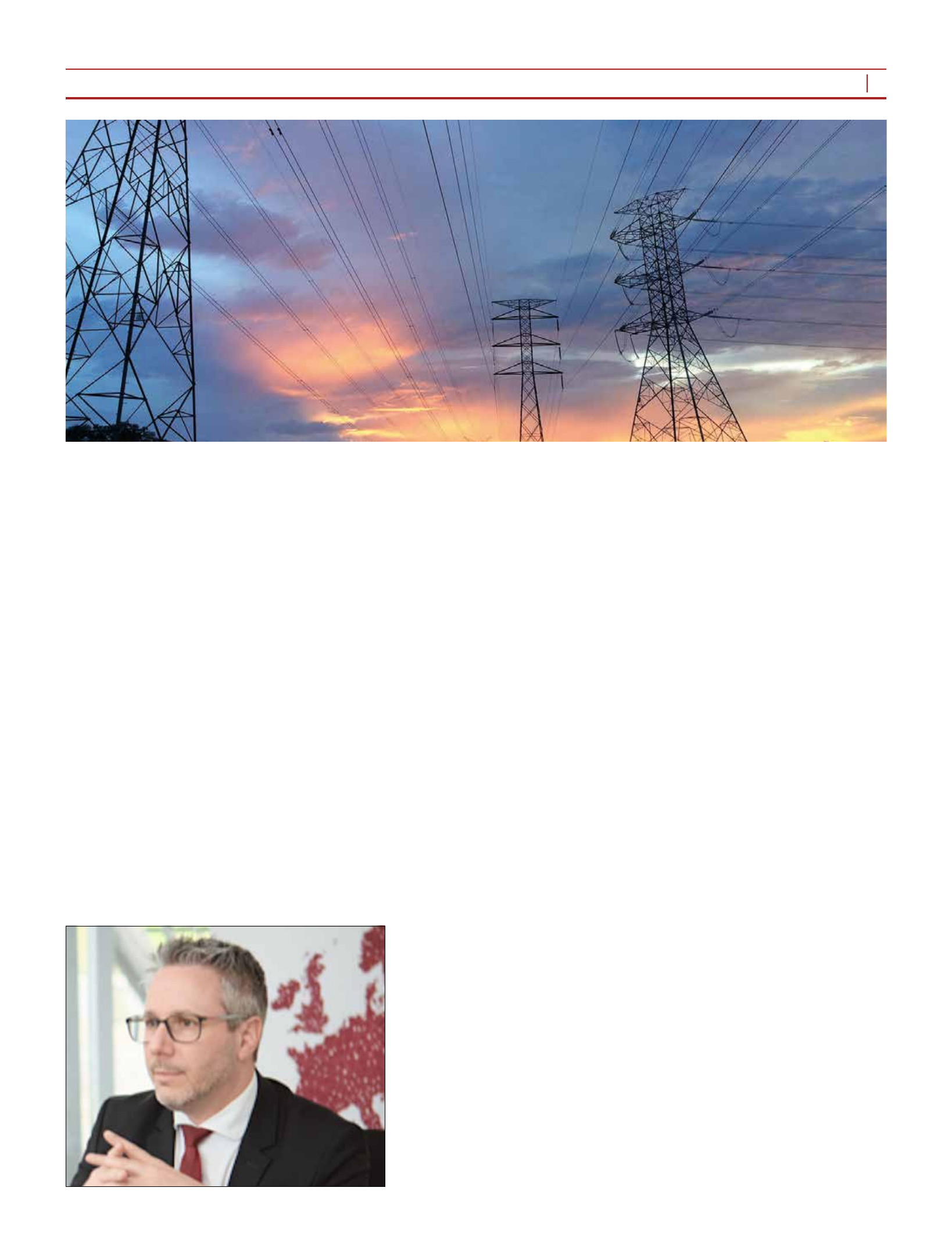
Kieffer: Silos between IT systems
are impeding cross-border power
trading
ambition that markets are being asked
to nance. It is an economic reality
that markets are acting on. The dis-
tinction matters enormously. Policy
can be reversed. Prices cannot be
“uninvented”.
Public policy still plays a role. It
provides the initial spark that opens a
market, sets a standard, or de-risks a
rst mover. But once the economics
take hold, the engine runs on its own.
The transition is self-sustaining not
because governments have held rm,
but because the cost curves have
moved beyond the point of return.
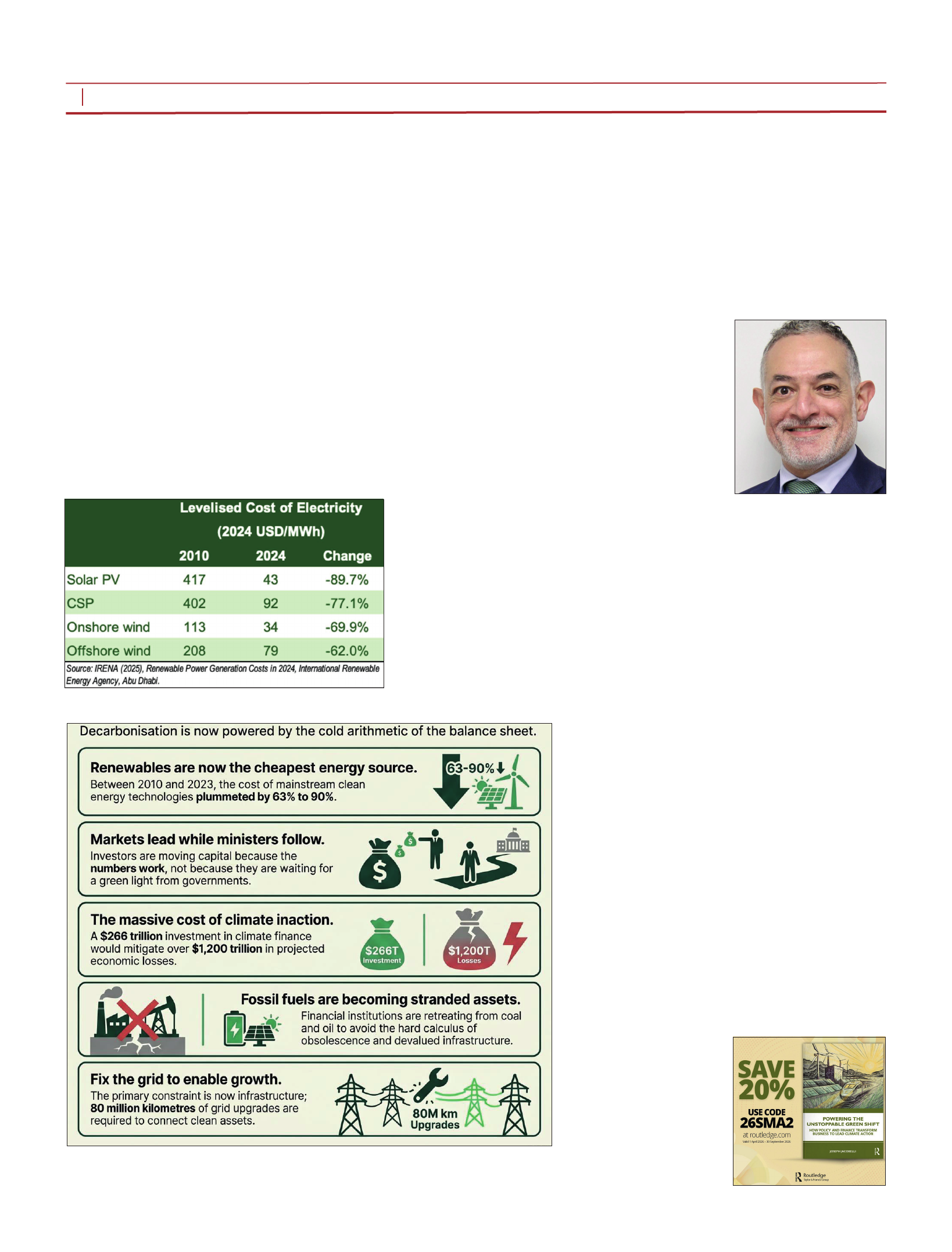
The most powerful evidence lies in
the Levelised Cost of Electricity
(LCOE), the cost per unit of output
over a proect’s lifetime. Between
2010 and 2023, the LCOE of main-
stream clean energy technologies de-
clined 63 to 90 per cent. Renewables
are no longer merely cleaner than
fossil fuels. In most of the world, they
are cheaper. Across Asia Pacic, solar
has already displaced thermal coal as
the least expensive source of electric-
ity, with production costs expected to
run 32 per cent below coal by 2030.
Cost competitiveness does not need
political support to sustain itself. The
notion that clean energy is a luxury
for wealthy nations is being disman-
tled on the ground. In Pakistan, farms
and factories are installing rooftop
solar not out of climate conviction but
as a hedge against rising fossil fuel
prices. Pure economic self-interest
T
he commentary “Iran: acceler-
ating the energy transition” (The
Energy Industry Times, April
2026) argued that the Iran conict has
become an unlikely catalyst for the
transition to net zero, the green shift,
despite all its disruption to global en-
ergy markets. Powering the Unstop-
pable Green Shift: How Policy and
Finance Transform Business to Lead
Climate Action’ (Routledge, 2026)
builds directly on that idea. Net zero
is no longer a political aspiration. It is
an economic inevitability.
The book traces the relationship
between policy, nance, and business,
with corporations at the heart of exe-
cution. Real-world cases anchor every
claim, illustrating that decarbonisa-
tion is not a cost to be absorbed but a
competitive strategy for long-term
value creation. The green shift is the
dening investment opportunity of
the century, and it is already under
way, with or without political consen-
sus behind it.
For too long, the energy transition
was framed as a virtuous but costly
state proect, built on subsidies and
political will. That framing is obso-
lete. Decarbonisation has crossed a
turning point. It is no longer a policy
drove that decision. Once clean ener-
gy is the cheaper option, the transition
moves forward on its own, regardless
of political conditions.
The energy transition is effectively
a capital exodus triggered by the col-
lapse in value of fossil fuel assets.
While the 90 per cent fall in
clean-technology LCOE acts as a
potent market “pull”, the “push” of
stranded assets – the physical hold-
ings whose investment value can no
longer be recouped and must be
written-off – has become the primary
driver of capital ight. As the global
fossil fuel market, currently valued at
over trillion, faces a slow unwind-
ing, the nancial sector is pricing in a
hard reality: unmitigated climate
change is not merely an environmen-
tal threat but a direct erosion of “po-
tential output,” permanently degrad-
ing the foundations of global capital
stock and Total Factor Productivity.
The arithmetic of this transition is
brutal: the Climate Policy Initiative
estimates that while 266 trillion in
climate nance is required by 2050, it
represents the only viable hedge
against 232 trillion in total losses
proected under a business-as-usual
traectory. With Swiss Re warning of
a 23 trillion annual hit to global
GDP, decarbonisation has shifted
from a policy ambition to a duciary
duty. Financial institutions are not
retreating from fossil fuels as a result
of political persuasion they are exe-
cuting a retreat from assets that are
becoming worthless, whether or not a
specic government has strong net
zero legislation in place.
The old obection that renewables
are too intermittent to be reliable is
losing ground fast. Battery storage is
transforming electricity into a trad-
able commodity, and in 2024, average
lithium-ion pack prices dropped be-
low 100kWh, making electric vehi-
cles cost-competitive with combus-
tion engines. Markets competed that
threshold into existence. Shenzhen
has fully electried its eet of 16 500
buses and 22 000 taxis across a city of
1 million people, proving the com-
mercial case at scale. When Google or
Amazon invest in Small Modular
Reactors (SMRs) to power their AI
infrastructure, they are following a
logic of energy security and price
stability. These are chiey commer-
cial decisions.
One critical insight from the book,
however, is that even a weak signal
from the state is now sufcient for
business and capital to act. A decade
ago, clean energy needed sustained
policy support to be viable. Falling
technology costs, the growing risk of
stranded assets, and the competitive
pressure of market-driven deploy-
ment have together created a momen-
tum that political volatility can slow
but cannot stop. A government can
withdraw a subsidy, repeal a target, or
abandon a multilateral commitment.
It would nd it difcult to raise the
cost of solar back above coal. It can-
not restore the investment case for
assets the market has already decided
to strand.
The debate about whether to pursue
the transition is largely over, not
THE ENERG INDUSTR TIMES - MA 2026
Decarbonisation Series
14
The primary engine of decarbonisation
The primary engine of decarbonisation
is markets, not ministers
is markets, not ministers
because the politics have been re-
solved but because the economics
have moved on without them. For
policymakers, the task is no longer
convincing the market to act, as it is
already acting. The task now is re-
moving the bottlenecks slowing it
down. The 0 million km of grid up-
grades required globally represent a
serious obstacle, and without them,
clean energy assets risk becoming
stranded for want of connection rather
than want of demand. Governments
that focus on infrastructure, planning
reform, and grid investment are
working with the market.
For investors, vague commitment
must give way to specic contractual
terms that make proects genuinely
bankable. Capital follows certainty,
and the economic case is now strong
enough to provide it.
The green shift is unstoppable be-
cause it has become the most compet-
itive economic choice available. The
trillion global fossil fuel economy
is being dismantled and rebuilt not by
ministers issuing declarations but by
the unsentimental pursuit of long-
term value. Those who read the decar-
bonisation landscape as a map of
business opportunity rather than a
regulatory burden will dene the
century. The economics have spoken.
Policy may inuence the pace. It no
longer sets the direction.
Joseph Jacobelli, head of single-fam-
ily ofce ourne mpact Capital,
brings 35+ years in energy markets.
e champions sustainable nance
through his Asia Climate inance
Podcast and writings like his second
book, ‘Powering the Unstoppable
Green Shift’.
Jacobelli: Cost competitiveness
does not need political support to
sustain itself
The economic inevitability of the green shift. The energy transition is effectively a capital exodus
triggered by the collapse in value of fossil fuel assets
Source: Joseph Jacobelli
Renewable power generation costs in 2024 (extract)
A new book has added a voice to a growing consensus: the energy transition is today driven by economics, not
ideology. Joseph Jacobelli
A
s global electrication pro-
gresses and energy demand
rises, existing grid infrastruc-
ture faces unprecedented pressure.
Energy providers expect to double
their grid capacity in the next decade
while modernising aging infrastruc-
ture. To meet these challenges, tech-
nological innovations, automation,
and standardisation are essential.
One key area where there has been,
and continues to be, technological
innovation, is protection and control
in power grids – this is crucial for
safeguarding critical assets like
transformers and circuit-breakers,
spanning both high-voltage (trans-
mission level, 230 kV and above)
and low-voltage (distribution level,
below 35 kV) infrastructure.
Earlier this year, Siemens Smart
Infrastructure (Siemens) announced
a signicant development for the
sector with the introduction of Sipro-
tec V, the virtualised version of its
Siprotec 5 protection and control de-
vice. This innovative solution is de-
signed for digital substations and en-
ables simple, scalable, and secure
power grids with up to six months
faster proect execution.
Siprotec V is the latest phase in the
evolution of protection technology,
which began with electromechanical
relays in roughly 1910. These were
advanced with the introduction of
static solid-state relays in the 1960s.
The next important step saw the rst
use of digital numerical relays in the
190s.
Commenting on the next steps
leading to this latest innovation,
Saurabh Talwar, Global Product
Manager for Virtualization and AI,
Siemens Smart Infrastructure Sie-
mens, said: “Siemens introduced its
Siprotec 5 modular relays around
2012. This is an embedded proces-
sor – a physical device that sits in
the customer environment. And then
around 201 we had the concept of
centralised protection, where one
digital numerical relay would be
dedicated to 2-3 feeders as opposed
to one feeder. But with centralisa-
tion, you cannot cover the whole
substation. With 20 feeders, you will
still need a number of boxes even
with the centralised approach.”
As protection has evolved over
time, so have utilities’ challenges in
terms of power infrastructure. Sie-
mens worked closely with industry
in developing the solution to these
challenges.
“I had the privilege of working
with roughly 20-25 customers early
on in this whole product develop-
ment to try to capture all the chal-
lenges our industry is facing. We
summarised these into three buckets:
increasing grid capacity pressure to
modernise and the people factor,”
said Talwar.
He explained that the need for
more grid capacity is being driven
by growing electrication – where,
for example, electric vehicles are be-
ing introduced on the network – and
growing power demand from the
data centres needed to handle the
surge in articial intelligence. “Utili-
ties always say: we need to double
our grid capacity in the next 10
years.’ And this is a massive under-
taking, especially at the pace at
which we are going,” he noted.
The industry is also under pressure
to modernise an ageing infrastruc-
ture, and there is a big expectation
that this has to be done rapidly. Tal-
war said: “Proect times must be re-
duced from say, two years, to per-
haps one year or less. And there is a
big expectation to do more automa-
tion and standardise solutions in our
power infrastructure.”
All of this, however, requires
skilled people, which, says Talwar is
“lacking in our industry”. He said:
“There’s a lack of skilled resources
and a lot of experts are close to re-
tirement We cannot ignore the
people factor anymore we need peo-
ple to do this modernisation so we
can catch up with the needed grid
capacity. If we do nothing, the gap
will only widen.”
According to Talwar, virtualisation
can address these challenges. Virtu-
alisation is a technological term en-
compassing approaches like contain-
erisation and virtual machine (VM)
technology.
For Siemens, virtualisation enables
centralisation of the entire electrical
substation. “Essentially, with central-
isation, we are talking about scal-
ability,” said Talwar. “In no way
does Siprotec V compete with Sipro-
tec 5. If customers don’t want to cen-
tralise or scale, they are O with
Siprotec 5 but if they want to scale
beyond 10-20 feeders, that’s where
Siprotec V really shines.”
Essentially, the solution supports a
transition phase where embedded
systems can act as the main system,
and virtualised solutions as backup
for testing and familiarity.
Talwar also stresses that Siprotec V
is not a digital twin. “A digital twin
emulates something physical, where-
as Siprotec V is a software-dened
product. However, a digital twin can
connect to Siprotec V to simulate
sensors and inect data for testing
and validation.”
By introducing Siprotec V, Siemens
is decoupling the protection applica-
tion (containing their proprietary al-
gorithms and IP) from the embedded
Siprotec 5 physical boxes. These ap-
plications are then hosted on an in-
dustrial PC or server.
“Crucially, Siemens is not rede-
signing protection algorithms from
scratch. We are reusing proven al-
gorithms from the embedded boxes,
ensuring consistent performance
and customer experience.” said Tal-
war. “The physical relay is still
there but what we are doing, is tak-
ing the application out of the physi-
cal relay and hosting it in a virtual-
ised environment.”
Siemens’ solution can host up to 60
virtual protection applications (virtu-
al relays or virtual IEDs – Intelligent
Electronic Devices) in one main sys-
tem. There can also be a backup sys-
tem of the main to ensure reliability
and prevent loss of visibility if one
server fails.
In terms of hardware, Siprotec V
requires an industrial PC or server
certied for substation environ-
ments, i.e. complying with 6150-3
or IEEE 1613 standards. Although
these servers are commercially avail-
able off-the-shelf, Siemens whitelists
and validates them for performance.
“It is very important that Siemens
whitelists these servers because we
have to validate performance – pro-
tection is time critical. We have to
ensure that it meets certain time pa-
rameters and tolerance levels,” Tal-
war explained.
The server uses the Debian Linux
operating system (OS), chosen for its
robustness in industrial applications.
Protection and control applications
are deployed on top of the OS, reus-
ing existing Siprotec 5 applications.
According to Siemens, the use of a
“bay-wise” (feeder-wise) concept is
crucial. This allows individual virtu-
al IEDs per feeder to be taken out of
service for maintenance without dis-
rupting other feeders.
The underlying technology is
based on “containerisation”, where
each app is an independent, contain-
erised application.
Talwar explained: “It’s ust like
your iPhone, where the phone itself
is the hardware server and the apps
that you see on your phone are pret-
ty much the applications for protec-
tion and control. ou can delete or
install an application and one appli-
cation does not interfere with anoth-
er – each is containerised in its own
environment.”
It has a web UI (user interface),
which is an inbuilt HMI (Hu-
man-Machine Interface) system that
allows technicians to interact with
the system, view substation layouts,
operate equipment (e.g., openclose
breakers), and see measurement de-
tails and logs. This provides consoli-
dated visibility of the entire substa-
tion, unlike embedded boxes which
only gave visibility at the individual
bay level.
“Since all the applications are
consolidated into one server, the UI
experience is also consolidated into
one large machine, essentially cen-
tralising the UI,” said Talwar. “It’s
important to note that this UI is not
a SCADA supervisory control and
data acquisition system. It connects
to the SCADA system, which su-
pervises events and alarms, but does
not replace it.”
Notably, he says Siprotec V is not
cloud-based it is a software solu-
tion that sits inside the customer’s
existing infrastructure.
Virtualisation has several key tan-
gible benets. Firstly, it enables
faster proect execution. According
to Siemens, turnkey proects (de-
sign, fabrication, building, testing,
engineering, commissioning) can be
accelerated by up to six months
when focusing on pre-fabricated
pre-engineered protection & control
substation building. This is
achieved by reducing the number of
physical panels needed resulting in
a smaller building footprint, leading
to an overall compressed timeline.
Describing a typical proect, Tal-
war said: “When we look at the de-
sign phase, the engineering phase,
fabrication, engineering, testing –
all the typical phases in every pro-
ect that we do – a proect of roughly
20-25 protection panels is reduced
down to two panels. So, the amount
we have to fabricate is less... this
means testing can start sooner,
which shrinks the overall timeline.
On top of this, the reduction in pan-
els means substation space require-
ments can be drastically reduced
by up to 45 per cent.”
The second maor benet is cost
reduction. According to Siemens,
panel costs can be reduced by up to
25 per cent. At the same time, cop-
per cable costs can be reduced by
up to 0 per cent due to digitalisa-
tion and less physical wiring.
This all adds up to better sustain-
ability. “Less panels, means smaller
building footprint, which means
less steel, less concrete. And on top
of that, less copper cable. If you
combine all of this with the other
PIs, it’s a better sustainability sto-
ry,” said Talwar. According to Sie-
mens’ calculations, the reduction in
copper cables also leads to a 50 per
cent reduction in carbon emissions
per substation.
The virtualisation concept, by pro-
viding computing power and re-
sources on an industrial PCserver,
enables the hosting of complex AI
applications directly in the substa-
tion. This aims to make substations
“smarter” and help utilities make
better decisions.
Talwar noted: “Siemens is actively
exploring and working on specic
AI applications and will bring them
to the market in the near future.”
Having announced the virtualisa-
tion concept a few months ago, Sie-
mens will make it commercially
available some time this year.
Talwar concluded: “We cannot
udge uptake in terms of mass de-
ployment in the next 5 or 10 years
but will be monitoring the market.
We are already in discussions with
customers. In the early stages we
will denitely be doing a lot of pilot
proect around the world, and these
will continue for the next 3-5 years.”
How to scale the number of protection relays needed to cover more feeders can be a challenge. A concept that uses
irtualisation could e the solution ringing cost space and enironmental enets Junior Isles reports.
Power grid protection eyes
Power grid protection eyes
virtual scaling
virtual scaling
THE ENERG INDUSTR TIMES - MA 2026
15
Technology Focus
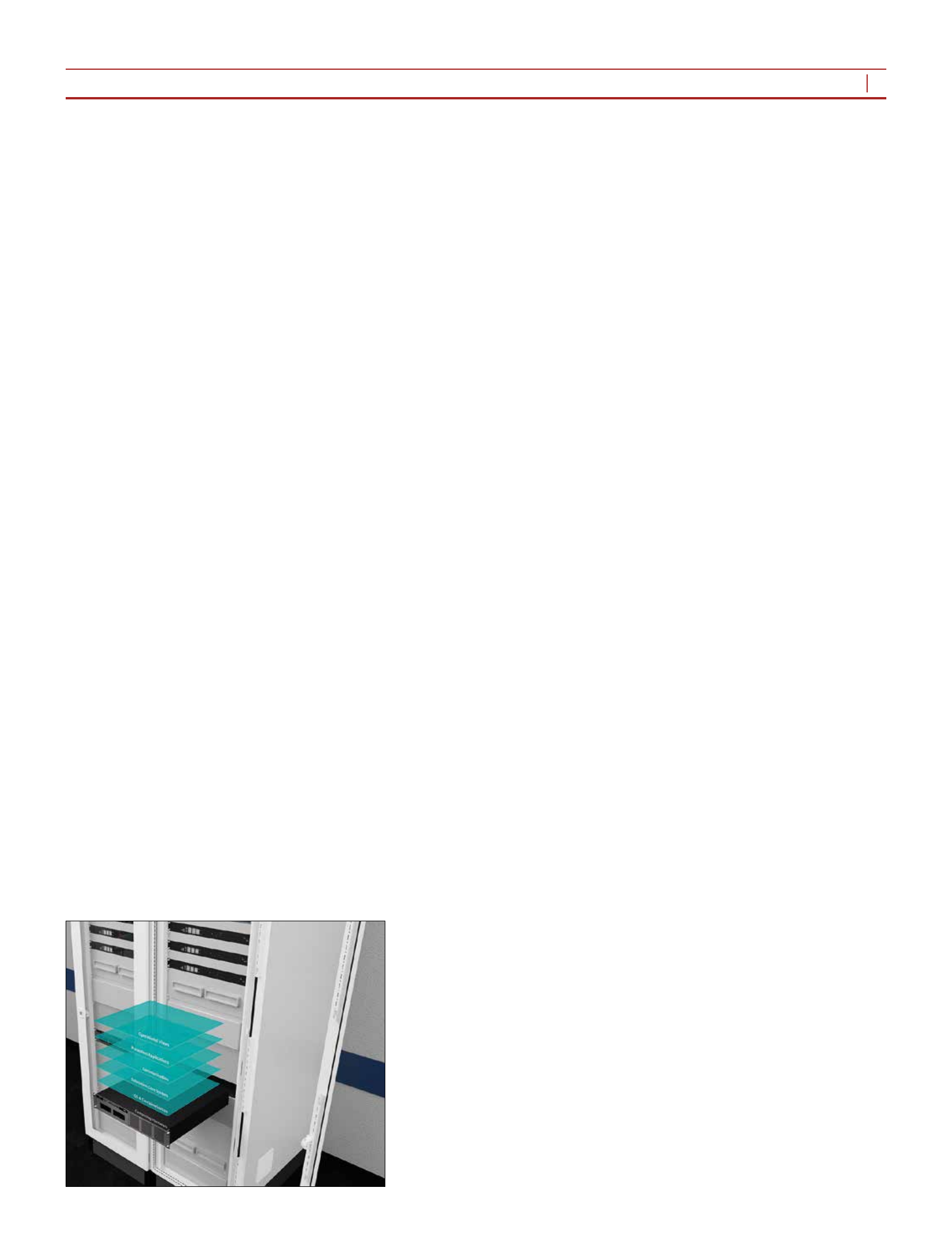
Siprotec V is the virtualised
version of Siemens’ Siprotec 5
protection and control device,
designed for digital substations
THE ENERGY INDUSTRY TIMES - MAY 2026
16
Final Word
A
s the Strait of Hormuz remains
closed, and the war against
Ukraine rumbles on, European
households and businesses continue to
creak under the pressure of astronom-
ical energy prices. In response to the
ongoing energy crisis, the European
Commission recently issued its Accel-
erateEU Communication – one part of
“a toolbox of targeted temporary mea-
sures” to address the recent spikes in
the prices of imported fossil fuels aris-
ing from the war on Iran. Yet striking
the right balance between bringing
short-term relief to its consumers,
while maintaining long term objec-
tives for the bloc, is a tricky one.
According to the Commission, the
Middle East situation has already cost
the EU more than €24 billion, about
€500 million per day, due to continued
dependence on imported fossil fuels.
It is no wonder AccelerateEU stresses
the need to replace fossil fuel imports
with homegrown energy.
But its approach must be careful not
to undermine Europe’s long-term
green transition goals. Pointing to
investments in electrication, energy
efciency and interconnections as
key priorities, EU competition and
climate chief Teresa Ribera, who
previously served as Spain’s Ecolog-
ical Transition Minister, said: “There
are things that we know we need to
do. The earlier we do them, the more
opportunities we build and the lower
costs we may be facing.”
To protect consumers from fossil
fuelled price peaks, AccelerateEU al-
lows member states to introduce
support schemes, energy vouchers and
social leasing schemes and lower ex-
cise duties on electricity for vulnerable
households. For industrial consumers,
the Commission will separately adopt
updated State aid rules, allowing
member states to support the most
exposed economic sectors.
Crucially, the Commission will
present legislative proposals on net-
work charges and taxation this month
(May), so electricity is taxed less than
gas. In addition, the Commission will
present an Electrication Action Plan
by the summer which will include an
electrication target.
AccelerateEU also urges EU mem-
ber states to implement the European
Grids Package, including addressing
grid connection queues – there are 400
GW of wind energy capacity current-
ly waiting for grid connections.
Solving this is possible: the UK has
halved its queues, from 144.5 GW in
2024 to 73.6 GW now.
Finally, AccelerateEU will help
member states make the most of their
EU funding to decarbonise and
electrify. This includes the €219 bil-
lion Recovery and Resilience Facili-
ty, EU cohesion funds as well as a
new €100 billion Industrial Decar-
bonisation Bank auction.
Ribera stressed that support should
focus on structurally lowering energy
bills, for example by expanding solar
panels, heat pumps and better insula-
tion, rather than relying on emergency
measures that risk distorting market
signals needed for the green transition.
She also warned against market
fragmentation. “We can build on a
common menu of solutions that help
the long-term transformation that we
need so that member states can
choose.”
Eurelectric, the organisation repre-
senting Europe’s electricity sector,
also warned that striking a balance
between short-term xes and long-
term goals will be crucial. In a state-
ment, it said Europe needs to provide
immediate relief to consumers and
industry but at the same time, it needs
to attract investment in clean energy,
grids and exibility if it wants to avoid
future crises.
It said “pushing electrication is the
only way out of the fossil fuel depen-
dency” but stressed that not all of the
Commission’s proposed measures
achieve the objectives of reducing
energy costs and short-term price
volatility, while preserving long-term
investment signals.
It noted that past interventions such
as gas price caps or broad subsidies,
including those implemented in Iberia
in 2022, have shown they can be dis-
tortive to the internal market and de-
liver limited benets to consumers.
Looking across the different compo-
nents of electricity bills, Eurelectric
identies several targeted measures
that can lower costs quickly without
undermining market functioning.
Taxes and levies is the rst area. It
says member states can lower VAT in
electricity, shift scal burdens onto
fossil fuels to incentivise electrica-
tion or exempt vulnerable consumers.
Removing non-energy-related levies
and cross-subsidies would also have a
direct impact.
Network tariffs, it says, should also
be targeted. Here, regulators can in-
centivise consumers to optimise ca-
pacity use and shift demand away from
peak periods.
Carbon costs could also offer imme-
diate support. The European Commis-
sion’s proposed €30 billion ETS
(Emissions Trading Scheme) Invest-
ment Booster (funded by 400 million
EU allowances) could support indus-
trial consumers. A targeted adjustment
of the Market Stability Reserve and
related parameters would help indus-
try while preserving the ETS as a
credible investment signal. More ef-
cient use of ETS revenues (over €43
billion raised last year alone) is also
critical to accelerate decarbonisation
and industrial transformation.
Directly targeting energy costs also
offers short-term ease. State aid tools,
such as the industrial price support
proposed in the Clean Industrial State
Aid Framework (CISAF), alongside
unlocking demand-side exibility, can
bring targeted relief, says Eurelectric.
Beyond these immediate xes, the
organisation says structural solutions
include: scaling up electrication, in-
cluding institutionalising the Industri-
al Decarbonisation Bank pilot auction
with a stronger, dedicated budget;
expanding long-term contracts such as
Power Purchase Agreements (PPAs)
and Contracts for Difference (CfDs)
to stabilise retail prices; and acceler-
ating the deployment of clean,
homegrown electricity generation,
exibility and storage to reduce Eu-
rope’s exposure to fossil fuel price
volatility.
The “homegrown” energy” element
is one that continues to chime strong
under current geopolitical tensions.
Renewables and energy storage pro-
ponents voiced strong support for this
element of the AccelerateEU plan,
especially as war again demonstrates
the fragility of a fossil-dependent
system.
WindEurope said that “with Accel-
erateEU, the Commission is crystal
clear”: any energy price relief mea-
sures must be underpinned by a faster
transition to homegrown renewables
and a more electried economy.
“It’s wake-up call for member states
to nally implement EU permitting
rules. And it specically highlights the
role repowering old wind farms can
play in boosting renewable power
supply,” said the organisation.
“Electrication is a strategic imper-
ative for Europe’s independence, se-
curity, and prosperity. It needs to
happen immediately and at scale. We
must make homegrown electricity the
cheapest option,” said Tinne van der
Straeten, WindEurope CEO. “This
means cutting VAT and taxes on heat
pumps, electric vehicles and other
electrication technologies. It means
addressing the low hanging fruit in
low- and medium temperature heat
processes. AccelerateEU is bold polit-
ical leadership in a time of crisis.”
Philippe Dumas, Secretary General
of EGEC, stated: “The Commission’s
focus on homegrown energy correctly
shines a spotlight on geothermal. It
provides the right attention to massive-
ly deploy geothermal in Europe. Now
it must quickly publish the Geother-
mal Action Plan to fast-track invest-
ments and reduce uncertainty, and save
families, businesses, industries and
farmers from the energy crisis.”
Meanwhile, Energy Storage Europe,
said it is key that energy storage is
being recognised not only as a decar-
bonisation enabler but as a strategic
competitiveness asset in the EU policy
framework.
“The recognition that energy storage
is no longer a side topic to renewables,
but a strategic infrastructure is a far
more powerful investment signal than
a narrow renewables policy,” it said in
a statement.
While the EU has a careful path to
tread in the coming months, that
pathway is clear – and there is no
going back. The drive for homegrown
energy is likely here to stay and it must
be clean.
Fatih Birol, Executive Director of
the International Energy Agency
(IEA), best summed it up in an inter-
view with the Guardian newspaper.
He said a key effect of the US-Israel
war on Iran was that countries would
lose trust in fossil fuels and demand
for them would reduce.
“Their perception of risk and reli-
ability will change. Governments will
review their energy strategies. There
will be a signicant boost to renew-
ables and nuclear power and a further
shift towards a more electried fu-
ture,” he said. “And this will cut into
the main markets for oil.”
Birol said there was no going back
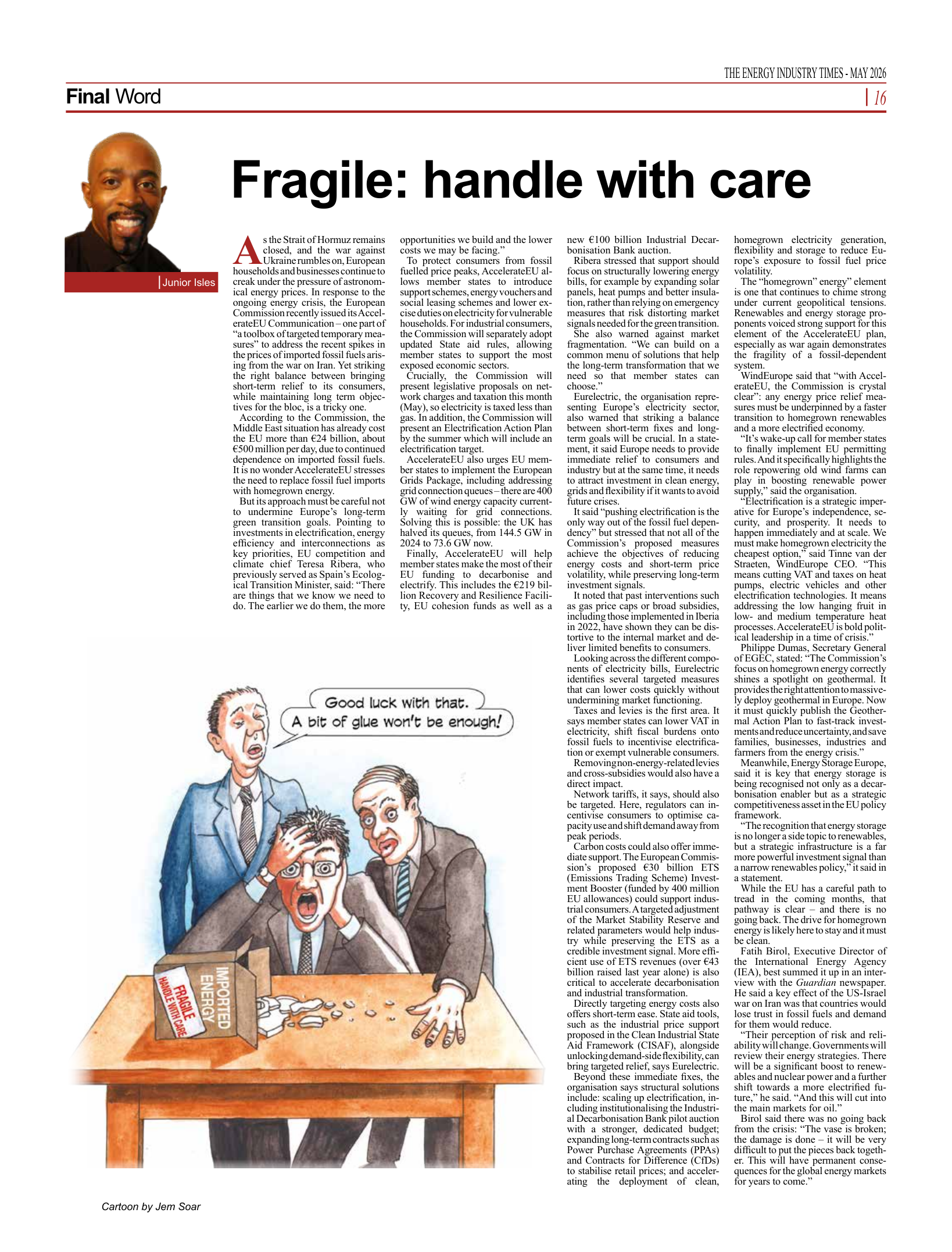
from the crisis: “The vase is broken;
the damage is done – it will be very
difcult to put the pieces back togeth-
er. This will have permanent conse-
quences for the global energy markets
for years to come.”
Fragile: handle with care
Junior Isles
Cartoon by Jem Soar
